
188JILI Chinese Poker Rules for Front, Middle and Back
Each of four players splits 13 cards into a 3-card front hand and two 5-card hands, middle and back.
| Fact | Value |
|---|---|
| 188JILI Drop Ball Game and Its Six Betting Zones | JILI's Drop Ball drops three balls across six betting zones; you predict where they land. |
| 188JILI Insurance Blackjack | Insurance is a side bet that the dealer has a ten-point card under an ace, paying 2 to 1 on up to half your bet. |
| 188JILI Poker Card Ranking From Royal Flush to High Card | From best to worst the ten poker hands are royal flush, straight flush, four of a kind, full house, flush, straight, three of a kind, two pair, one pair and high card. |
| 188JILI Pusoy Dos Ranking and the Top Card Explained | In Pusoy Dos the 2 is the highest rank and the 3 the lowest. |
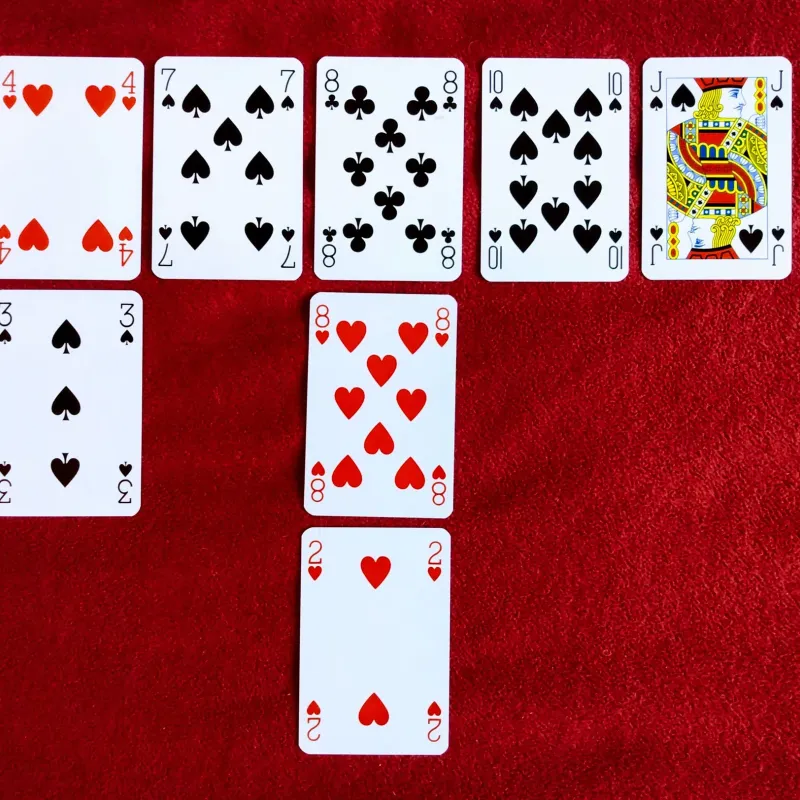
The chinese poker rules come down to one job: split 13 cards into three poker hands that rise in strength from front to back. It is a 4-player game with a standard 52-card pack, and everyone plays for themselves. The rules below follow Pagat’s Chinese poker page and Wikipedia’s Chinese poker article, and they sit in the same family as the other Pinoy card games on the Poker row.
Chinese poker rules in five steps
- Agree a stake for one unit before dealing.
- Shuffle, cut and deal 13 cards to each of four players.
- Arrange your cards into a back hand of 5, a middle hand of 5 and a front hand of 3, face down.
- Expose all three hands together and compare them against each opponent’s matching hands.
- Win one unit for each opposing hand you beat and lose one for each that beats you; equal hands pay nothing.
Setting 13 cards into three hands
The standard poker ranking is used and there are no wild cards. Check the order of hand types in the poker card ranking from royal flush down if you need it.
| Hand | Cards | Which hands it can be | Must be |
|---|---|---|---|
| Back | 5 | Any poker hand | The strongest of your three |
| Middle | 5 | Any poker hand | Better than the front, weaker than the back |
| Front | 3 | Three of a kind, one pair or high card | The weakest of your three |
What makes a hand foul
A hand is foul when the order breaks: the back must be better than the middle, and the middle better than the front.
| Front | Middle | Back | Result |
|---|---|---|---|
| Pair of eights | Pair of sevens | Flush | Foul: the middle is weaker than the front |
| Pair of sevens | Pair of eights | Flush | Legal: each hand beats the one before it |
| High card, king | Straight | Full house | Legal: strength rises to the back |
Pagat adds a second case. In its example a player may not put a pair of jacks in front, because the other ten cards could then no longer make a stronger middle hand and a stronger back hand. Straights and flushes in the front do not count at all, since only three card types exist there. The penalty for a foul is agreed by the table; Wikipedia states only that a misplaced hand is subject to one.
Scoring: one unit per hand
In the simplest payment system a player collects one unit from each opponent whose front, middle or back hand they beat. Ties pay nothing. Example against one opponent:
| Hand | Result | Units |
|---|---|---|
| Front | You win | +1 |
| Middle | You lose | -1 |
| Back | You win | +1 |
| Net | +1 |
Many tables add the overall point, one extra unit between two players for the net winner, so winning two of three hands matters. Agree it before the deal, since the scoring varies from group to group.
Bonus hands in Pagat’s typical scale
Strong hands in a position can be worth more than one unit. Pagat gives this typical scale and says to agree it in advance.
| Winning hand | Units instead of 1 |
|---|---|
| Three of a kind in the front | 3 |
| Full house in the middle | 2 |
| Four of a kind in the back or middle | 4 |
| Straight flush or royal flush in the back or middle | 5 |
Pagat’s worked example: one player holds 6-6-6 in front, 4-4-4-9-9 in the middle and K-K-K-8-8 at the back, against Q-Q-7, J-J-J-2-2 and 5-5-5-5-A. The first wins 3 units for the front, but loses 2 in the middle and 4 at the back, so that player pays 3 units. Bonuses count only for hands you win.
Special 13-card hands
Some tables allow special hands that win automatically if declared before the cards are exposed. Wikipedia calls these “naturals” and notes that a natural pays an agreed amount, which varies by rule set. Pagat’s typical list, in ascending order:
| Special hand | Units |
|---|---|
| Six pairs and an odd card | 3 |
| Three straights | 3 |
| Three flushes | 3 |
| Complete A-to-K straight | 13 |
How JILI’s Pusoy Go uses the same idea
In the Philippines Chinese poker is called Pusoy, which is a different game from the Pusoy Dos ranking of suits. JILI’s Pusoy Go page describes four players arranging 13 cards into sets of 3, 5 and 5 that are compared three times. Winning all three comparisons against one opponent triggers “Pusoy”, which doubles the winnings, and winning against all three opponents triggers “Winner takes all”, which doubles them again. Open the title’s info screen for its exact payouts; a blackjack side bet such as insurance in blackjack is a separate table game with its own maths.
FAQ
How many cards do you get in Chinese poker?
Thirteen. They are arranged into a back hand of 5 cards, a middle hand of 5 cards and a front hand of 3 cards.
What makes a hand foul in Chinese poker?
A foul is a misplaced arrangement: the back hand must be better than the middle, and the middle better than the front. Wikipedia says a player with a misplaced hand is subject to a penalty, which the table agrees in advance.
Which hands can the three-card front hand be?
Only three of a kind, one pair or a high card. Straights and flushes do not count in a three-card hand.
Is Chinese poker the same as Pusoy Dos?
No. Pagat notes the Philippines calls Chinese poker Pusoy, and Pusoy Dos is the Big Two climbing game, so the two are different games.
Related guides
| Guide | What it covers |
|---|---|
| 188JILI Drop Ball Game and Its Six Betting Zones | drop ball game |
| 188JILI Insurance Blackjack | insurance blackjack |
| 188JILI Poker Card Ranking From Royal Flush to High Card | poker card ranking |
| 188JILI Pusoy Dos Ranking and the Top Card Explained | pusoy dos ranking |