
188JILI Insurance Blackjack: What the Side Bet Really Pays
Insurance is a side bet that the dealer has a ten-point card under an ace, paying 2 to 1 on up to half your bet.
| Fact | Value |
|---|---|
| 188JILI Chinese Poker Rules for Front, Middle and Back | Each of four players splits 13 cards into a 3-card front hand and two 5-card hands, middle and back. |
| 188JILI Drop Ball Game and Its Six Betting Zones | JILI's Drop Ball drops three balls across six betting zones; you predict where they land. |
| 188JILI Poker Card Ranking From Royal Flush to High Card | From best to worst the ten poker hands are royal flush, straight flush, four of a kind, full house, flush, straight, three of a kind, two pair, one pair and high card. |
| 188JILI Pusoy Dos Ranking and the Top Card Explained | In Pusoy Dos the 2 is the highest rank and the 3 the lowest. |
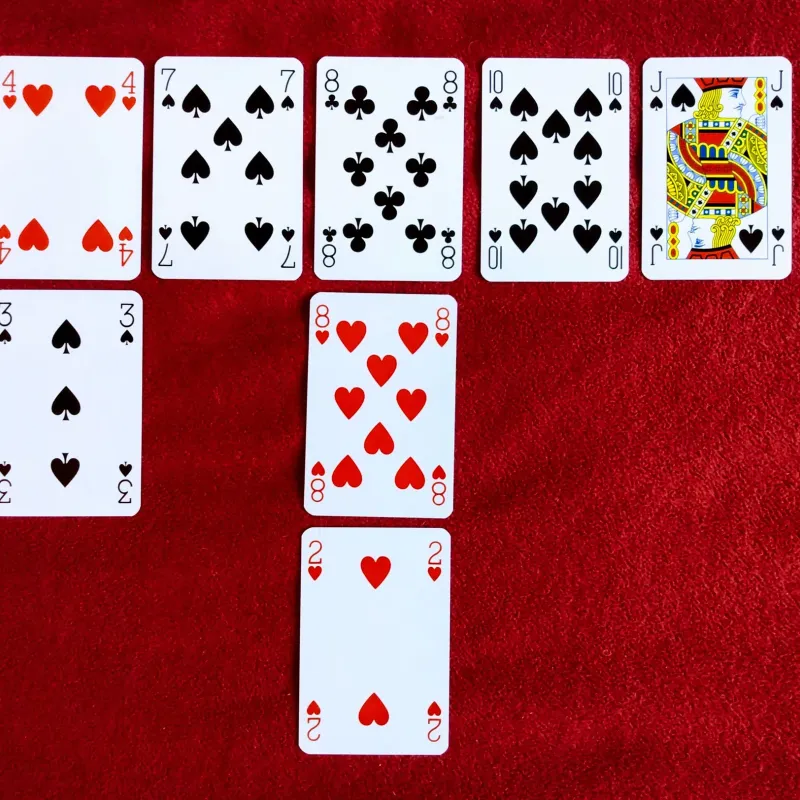
Insurance blackjack is the side bet the dealer offers the moment an ace turns face up, and it is one of the few bets whose cost you can work out on a napkin. This page shows the arithmetic behind it so you can decide at the table without a guess. Blackjack is one of the Pinoy card games listed beside Tongits, and JILI’s own Blackjack page lists insurance among its options.
What insurance blackjack is
Insurance is a side bet that the dealer has a ten-point card in the hole. It is offered when the dealer already has an ace up, so it wins when the dealer has blackjack. Wizard of Odds and Wikipedia agree on the terms.
| Term | Value |
|---|---|
| When it is offered | The dealer shows an ace |
| What it bets on | The dealer has blackjack (a ten-point card in the hole) |
| Maximum stake | Up to half of your original bet |
| Payout | 2 to 1 |
The arithmetic for a six-deck shoe
Wizard of Odds assumes six decks (312 cards) and no information beyond the dealer’s ace. One card is removed for that ace, leaving 311. There are 96 ten-point cards (16 per deck: the 10, J, Q and K in four suits, times 6 decks), so 96 cards win the bet and 215 lose it.
- Chance the bet wins: 96 / 311, about 30.9%.
- Win contribution at 2 to 1: 2 x 96 / 311 = 0.6174, or 61.74%.
- Chance the bet loses: 215 / 311 = 0.6913, or 69.13%.
- Expected result: 0.6174 - 0.6913 = -0.0740, or -7.40%.
For every ₱100 you put on insurance, you expect to lose ₱7.40 over many hands. The assumption that matters is the deck count: this figure is for six decks and no other cards known.
A ₱200 example you can follow
Say you bet ₱200 and take ₱100 insurance with a dealer ace showing.
| Dealer’s hole card | Insurance bet | Main bet (before your play) |
|---|---|---|
| Ten-point card (blackjack) | Wins ₱200 | Loses ₱200, so you break even overall |
| Anything else | Loses ₱100 | Plays on as normal |
Without insurance you lose ₱200 in the first row and nothing extra in the second. With it you break even in the first row and lose ₱100 in the second. The dealer has blackjack in 96 of 311 cases, about 31% of the time, so the second row is the common one. Wikipedia puts it plainly: the dealer has blackjack less than one-third of the time.
Fewer decks, a smaller cost
Wizard of Odds explains that the edge on insurance changes with the number of decks, because the ace already removed leaves the shoe slightly ten-heavy and the effect is stronger with fewer decks. A check with one deck: 52 cards, 16 tens-value cards, the dealer’s ace removed, so 16 winners and 35 losers among 51 cards. Expected result: 2 x 16 / 51 - 35 / 51 = -3 / 51 = -5.88%.
| Decks | Winning cards | Cards left | Expected result of insurance |
|---|---|---|---|
| 1 | 16 | 51 | -5.88% |
| 6 | 96 | 311 | -7.40% |
Either way the sign is negative. Wikipedia adds that insurance is only advantageous when the hole card has more than a one in three chance of being a ten, and 16 in 51 and 96 in 311 are both below that line.
Even money is insurance with another name
When you hold a blackjack and the dealer shows an ace, many tables offer even money. Taking it is the same as taking insurance, and Wizard of Odds shows why. Declining gives you 0 when the dealer has a ten in the hole (95 of 309 cards, a push) and 1.5 otherwise (214 of 309 cards).
- Even money pays a certain 1 unit.
- Declining pays 1.5 x 214 / 309 = 1.0388 units on average.
- The difference is about 0.0388 units per bet, or 3.88%, in favour of declining.
Those figures assume a six-deck shoe, no other cards known and a 3 to 2 payout for blackjack. Taking the sure unit feels better for a minute but gives that edge up.
What this means for a table game on 188JILI
JILI’s Blackjack page lists splitting, doubling down and insurance options and a 3:2 bonus for a blackjack at the start, and says you can play up to three hands per round. It does not state the number of decks, so open the game’s rules screen to read the deck count, and compare it with the table above. Declining insurance does not turn blackjack into a winning game; it only avoids a side bet whose edge Wikipedia notes is generally higher than the main game’s. Treat any rule about when to take it as arithmetic, never as a system, and read the house edge meaning for what a negative figure means over time.
If your next table is a different game, the poker card ranking covers five-card hands, the Pusoy Dos ranking for suits covers the climbing game, and the drop ball game pays on landing zones instead of cards.
FAQ
What does the insurance bet pay in blackjack?
It pays 2 to 1 if the dealer has blackjack. The bet is offered when the dealer shows an ace and can be up to half of your original bet.
Is insurance a good bet?
Wikipedia says insurance bets lose money in the long run, and Wizard of Odds works out a loss of 7.40% of the insurance stake in a six-deck game with no other cards known.
What is even money in blackjack?
It is insurance offered when you already hold a blackjack and the dealer shows an ace. You swap the 3 to 2 payout for a guaranteed 1 to 1, which gives up about 3.88% of your bet on average in the six-deck example.
Does the number of decks change the cost of insurance?
Yes. Fewer decks mean a higher share of tens after the dealer's ace is removed, so the cost of insurance is smaller; more decks make it costlier. Check the game's rules screen for its deck count.
Related guides
| Guide | What it covers |
|---|---|
| 188JILI Chinese Poker Rules for Front, Middle and Back | chinese poker rules |
| 188JILI Drop Ball Game and Its Six Betting Zones | drop ball game |
| 188JILI Poker Card Ranking From Royal Flush to High Card | poker card ranking |
| 188JILI Pusoy Dos Ranking and the Top Card Explained | pusoy dos ranking |